Best heating system EVER!
Hello again, friends. I’m excited to write about my favorite heating system EVER! Many of us live in a climate where HEATING is the main method of conditioning our living space. I lived for many years in a hot desert where COOLING is the main method of conditioning. Now that I live in the mountains, heating is key.
Forced Air Furnaces: The Standard Choice
By far the most common method of heating is with a forced air furnace that utilizes natural gas or propane as the heating fuel and electricity to power the fan. This system is the most common because it is the least expensive…well, at the install phase anyway. Long term, there is a better way—cost and comfort. We will get to that.
Forced Air Drawbacks: Inconsistent Comfort
The problem with a forced air system is that it uses air as the medium for heating. Air heats up quickly, which is nice, but it also cools quickly, which isn’t ideal for heating an area evenly. The thermostat calls for heat –the big fan we call the blower, powers up and then the burners of the furnace ignite. The air moves through the furnace and changes temperature from 60-ish degrees to 90-ish degrees. This hot air is pushed through the duct system and warms the house until the thermostat is satisfied. It then shuts the furnace down until it is cold again and the thermostat calls for heat. This works, but the temperature of the house rises and falls all day long. Spikes of heat and dips of cold. The air just doesn’t have thermal mass that retains heat for very long.

Discover Hydronic Heating: Radiant Warmth
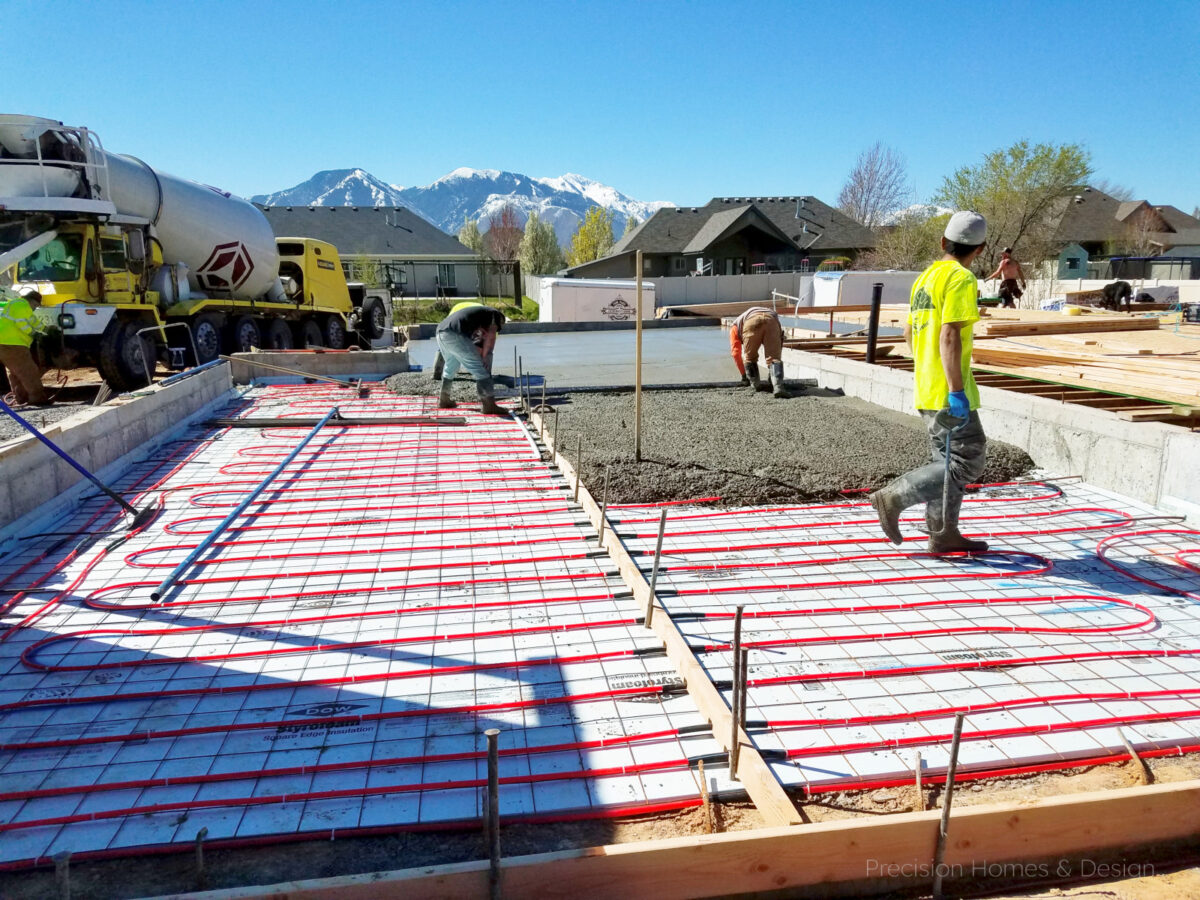
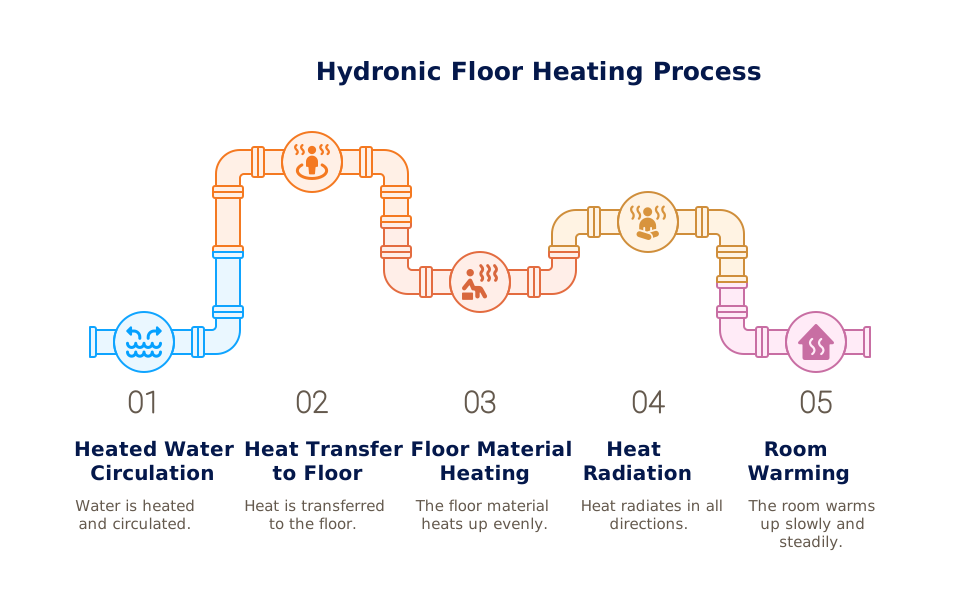
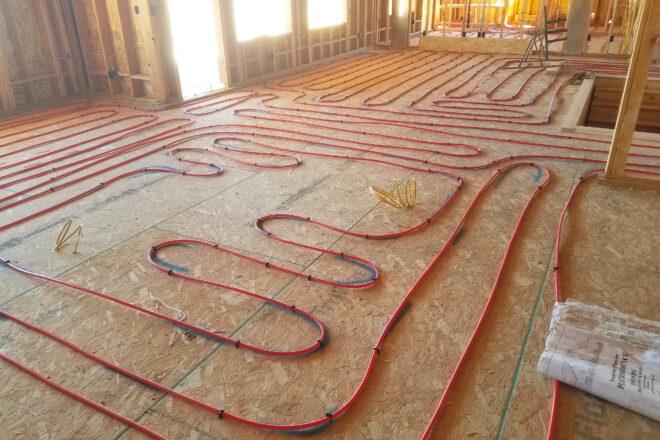
So now we come to the fun part of talking about HYDRONIC heating, also called Radiant Heating Floors. This is a type of radiant heating. Hydronic heating is a heating method that utilizes a water heat heater, called a boiler (that is super-efficient), to heat the water that is then circulated through tubing in the floors of the house.
How Hydronic Heating Works
The Benefits of Hydronic Heating:
- Radiant Warmth That Lasts
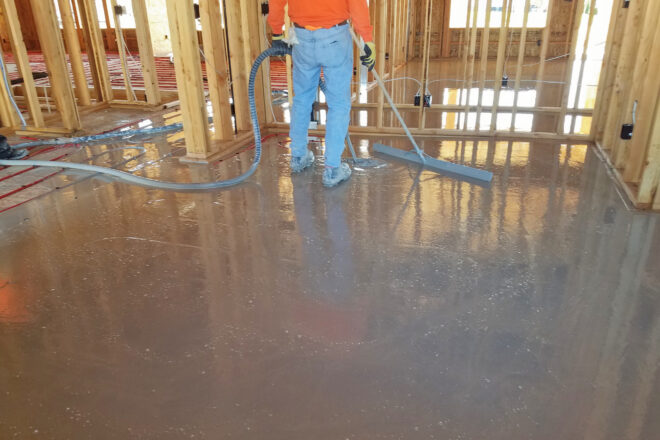
As the heated water circulates in the floor, it heats up everything around it. This can be the concrete slab in which the tubing is encased, or the lightweight concrete poured over a framed wood floor. The heat then RADIATES in all directions, warming everything slowly, steadily, with better heat retention. - Consistent and Even Temperatures
Hydronic heating eliminates the TEMPERATURE SPIKES and DIPS. It radiates warmth in all directions. As the warm floor warms up the air above it, that warm air slowly rises and makes every room very comfortable. - Warm Floors Mean Total Comfort
Walking barefoot on WARM FLOORS is heavenly. When there is snow outside or cold temperatures, it is very nice to have the floor feel warm. When our feet are warm, the rest of us stays warm. - Custom Comfort with Heat Zoning
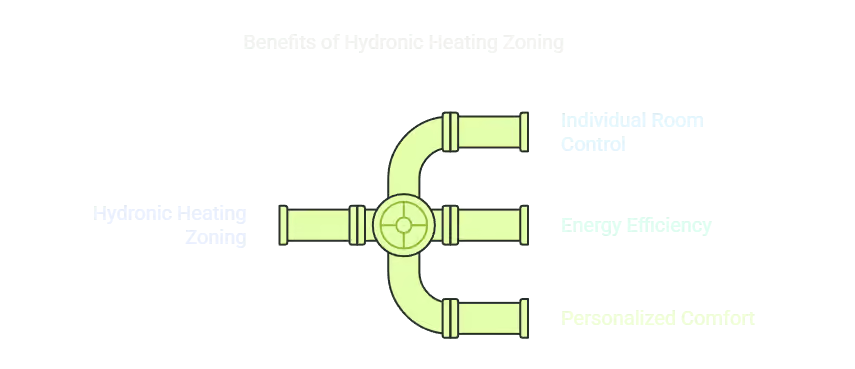
Heat ZONING is simple. Because the heat is distributed by a closed loop of tubing, each room/zone is controlled by its own thermostat to maintain the desired temperature. A room that is not used much can be set to stay cooler to save energy if desired. Many like to sleep in a cool bedroom but want the bathroom to be warm. This is easy to do with Hydronic Heating. - Superior Efficiency and Cost Savings
Hydronic heating is much more EFFICIENT than forced air heating. It uses much less electricity to circulate the hot water than a forced air blower uses to circulate air. The boiler used to heat the water is a super-high efficient 96% plus unit which means it uses almost all the energy in the fuel gas. A Hydronic system uses less energy than a forced air furnace. Over time, this can lead to substantial savings. - Silent Operation for Peaceful Living
Hydronic heating is QUIET. The system runs silently. No blower fan noises. It really is nice. - Space-Saving Installation
Installation of a Hydronic system takes up less space. The tubing carrying the hot water takes so little space that it is not necessary to lower ceilings for big air ducting.
The Limitation: No Built-In Cooling
Now, like just about everything in life, there is a drawback with Hydronic heating. Cooling (Air Conditioning) is not possible with a Hydronic system. This necessitates a separate forced air conditioning system. In most cases, the air conditioning and heating are combined into the same unit and utilizes the same duct work. So with Hydronic heating, if you want/need air conditioning, you have to install a separate system for that. BUT, this isn’t all bad either, because air conditioning systems work best when the cool air is supplied in the CEILING. This allows the cool air to enter each room and ‘fall’ to the floor, which cools evenly.
The Perfect Pair: Hydronic Heat and Ceiling Cooling
The perfect conditioning system includes Hydronic heat in the floor and air conditioning in the ceiling. Hydronic heat in the floor for consistent, cozy warmth where you need it most, and air conditioning in the ceiling for efficient, even cooling all summer long. With radiant floor heating, you enjoy gentle, all-encompassing warmth starting from your toes up, eliminating cold spots and drafts. Meanwhile, ceiling-mounted air conditioning delivers cool air from above, allowing it to fall naturally and evenly throughout the room for optimal comfort. Together, these systems keep your home comfortable year-round, giving you unmatched control, efficiency, and luxury.
Summary
I hope you’ve enjoyed reading about Hydronic heating. Another source of Hydronic heating I recommend is www.HydronicPros.com, which is run by John Siegenthaler, PE. He is a Hydronics wizard, and I love his work. I studied his book Modern Hydronic Heating in 2007 and enjoyed it tremendously. Without a doubt, Hydronic heating is my favorite heating system!